Bipartisan permitting reform promises speed and certainty. But the BAAJA legislation threatens to deliver something quite different for historic preservation
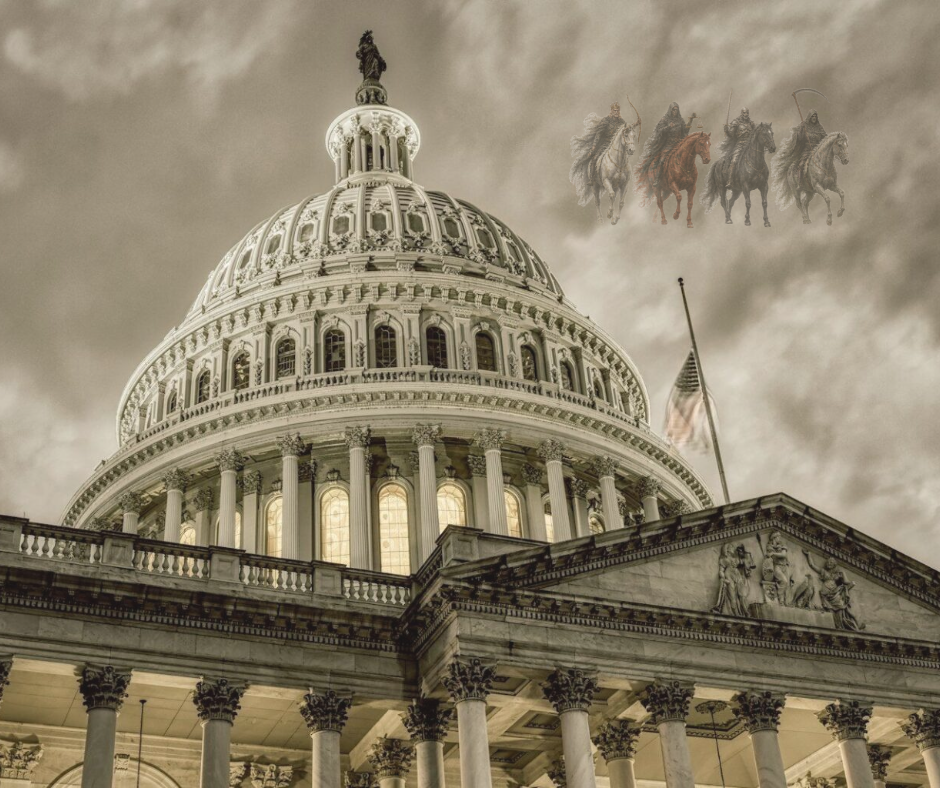
The Four Horsemen of the Apocalypse are traditionally associated with conquest, war, famine, and death. They may soon have some new company: four horsemen of permitting reform, riding into Washington under the banner of the Bipartisan American Affordability and Jobs Act (BAAJA).
BAAJA promises a faster, more predictable federal permitting process. Those are worthwhile goals. Anyone who has worked with federal agencies, project proponents, or preservation offices knows there are real opportunities to make the process work better. But four major elements of BAAJA’s proposed changes to Section 106 of the National Historic Preservation Act raise a fundamental question: Are we fixing the problems that slow projects down, or simply removing the safeguards designed to help agencies make informed decisions?
The first horseman: Scope. What gets left out?
Section 106 requires federal agencies to consider the effects of their undertakings on historic properties. A highway project can affect a historic neighborhood well beyond its construction footprint; while a transmission line can forever alter the setting of a historic property. Historic properties don’t conveniently confine their significance to a project boundary, and the effects of infrastructure development don’t always follow the lines on an agency map.
BAAJA would narrow the definition of what constitutes an undertaking and restrict the consideration of adverse effects. The practical consequence is that far fewer federal actions (and fewer impacts from those actions), receive meaningful consideration. Though this may make the universe of reviews smaller – it doesn’t necessarily lessen the consequences of federal projects.
The second horseman: Consultation. Who gets left out?
One persistent misconception about Section 106 is that consultation is simply another layer of review. It isn’t. At its best, it is how agencies discover what they don’t know before making decisions that are difficult, expensive, or impossible to reverse.
State and Tribal Historic Preservation Officers, Indian Tribes, local governments, preservation organizations, and the public bring different knowledge to the table. A local resident may know a property’s history that never made it into an agency database. A Tribe may identify a cultural landscape whose significance cannot be understood from an archaeological inventory alone. A SHPO may recognize that an apparently isolated resource is part of a much larger historic context.
These aren’t procedural inconveniences. They’re precisely the kinds of information consultation is supposed to surface.
The third horseman: The Clock. Can Congress legislate away reality?
Anyone who has worked through a Section 106 review knows the clock rarely starts with a complete project submission, a clearly defined area of potential effects, and all the right people already at the table. Projects change. Information is missing. Historic properties are discovered. Consultations are initiated late. Agency staff are stretched across competing priorities. These are not excuses. They’re realities of administering a federal review process across an extraordinarily diverse country.
BAAJA would tie Section 106 deadlines to the federal environmental review schedule, but a deadline cannot manufacture staff capacity, complete an inadequate submission, or make a complicated consultation issue disappear. Nor does it help to impose a deadline on one participant when the information needed to complete the review is still sitting with someone else.
If Congress wants faster reviews, it should adequately address the reasons reviews take time: adequate resources, early consultation, complete submissions, and clear, consistent expectations. A shorter clock is not a substitute for any of those things.
The fourth horseman: Accountability. What happens when the process fails?
BAAJA proposes significant changes to judicial review and available remedies for alleged NHPA violations, including restrictions on preliminary injunctions.
The argument for limiting litigation is understandable. No one benefits from avoidable disputes that emerge late in a project. But there is a difference between preventing unnecessary litigation and limiting the ability to hold agencies accountable for failing to follow the law.
The best way to reduce litigation is to get the process right in the first place. Identify issues early. Consult meaningfully. Build a complete administrative record. Resolve disagreements before they become disputes. Those steps help agencies make decisions that can withstand scrutiny and give project proponents greater confidence that approvals will hold.
Restricting remedies without addressing underlying problems may simply shift the consequences downstream. A project that moves forward without adequately addressing its legal obligations isn’t necessarily a more predictable project. It may just be a project with unresolved problems.
A faster process isn’t necessarily a better process
Here’s the irony: BAAJA risks undermining the very predictability and efficiency it promises to deliver.
Section 106 is not a veto on infrastructure development. It requires agencies to take historic preservation into account before making decisions. For nearly 60 years, it has provided a framework for doing that while allowing federal projects to move forward.
That doesn’t mean the process is beyond improvement. There are legitimate frustrations with inconsistent implementation, duplicative efforts, late consultation, and inadequate agency capacity. SHPOs experience those frustrations firsthand. But the answer isn’t simply to narrow the review, limit participation, impose deadlines, and weaken accountability.
Practical steps toward an effective process:
- Provide federal agencies and SHPOs the resources to do the work
- Present clear guidance
- Start consultation before project decisions are effectively made
- Submit complete information.
- Use programmatic approaches where they genuinely improve outcomes
Historic preservation and infrastructure development are not opposing interests. Both benefit from good planning, informed decisions, and public confidence. The goal should be a process that identifies problems early enough to solve them, not one that makes those problems harder to see.
The Four Horsemen make for a memorable legislative spectacle. But before Congress saddles up, it should consider whether it’s actually clearing the road to progress — or just making it easier to ride past the warning signs.