Meaningful state involvement is essential to ensuring project delivery that better serves communities across the country
As Congress considers federal permitting reform, states have an important role to play in shaping policies that affect their infrastructure, communities, and historic resources. NCSHPOs latest resource underscores the importance of states lending their experience and perspective to ongoing discussions.
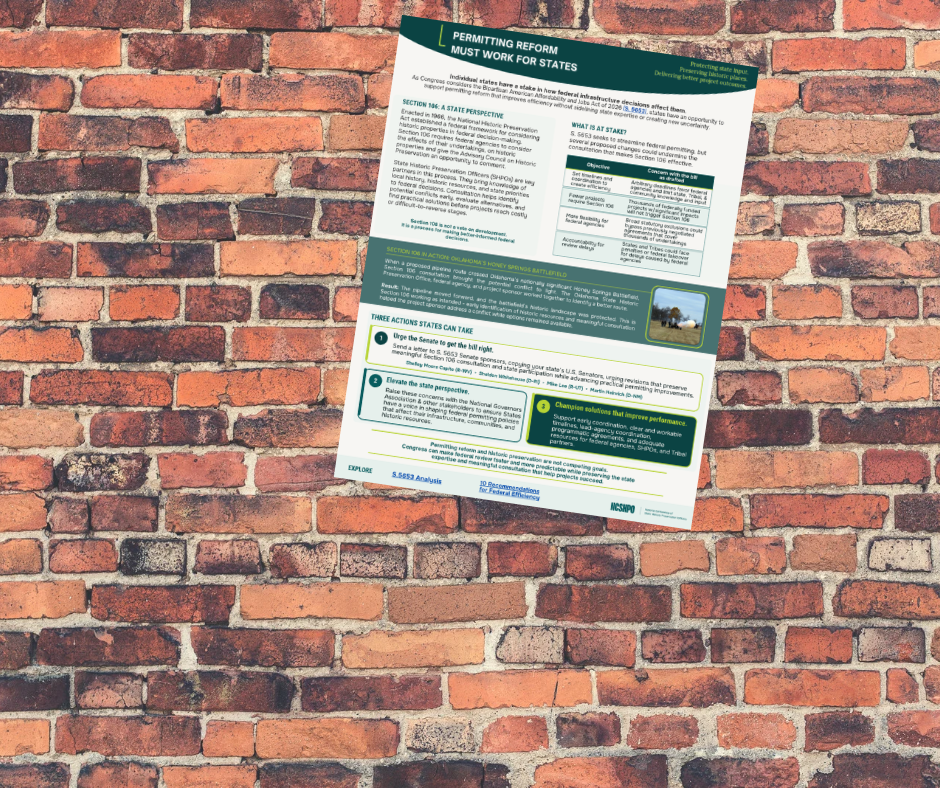
The one-pager Permitting Reform Must Work for States focuses on the role states must be afforded in conversations about permitting reform, with particular attention to the proposed changes to Section 106 of the National Historic Preservation Act (NHPA), currently under consideration within the Bipartisan American Affordability and Jobs Act of 2026 (S. 5653).
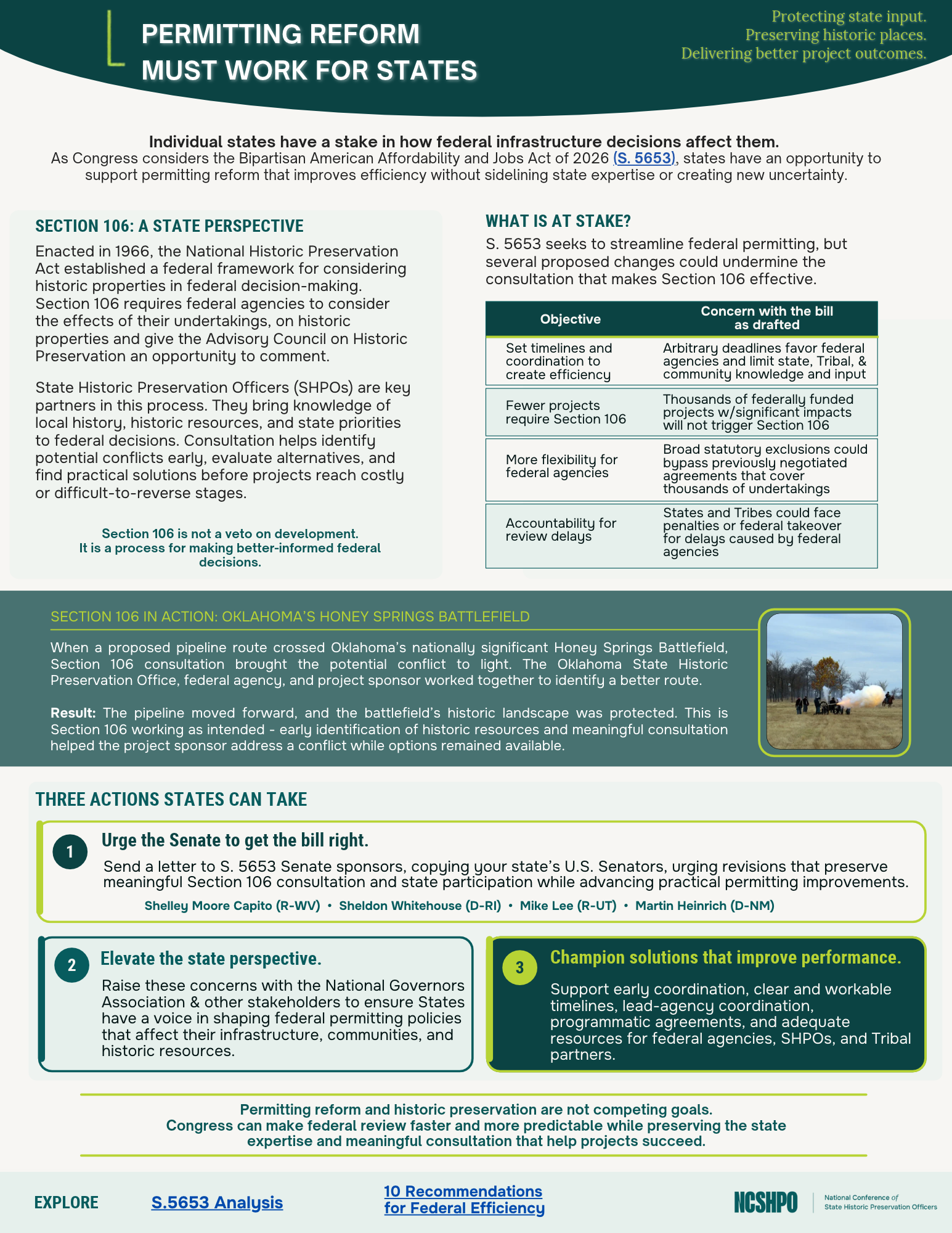
Enacted in 1966, the NHPA established a framework for federal agencies to consider the effects of their actions on historic properties. Section 106 provides an opportunity for agencies, State Historic Preservation Officers (SHPOs), Tribal partners, and other stakeholders to identify potential conflicts, consider alternatives, and work toward practical solutions early in project planning.
Numerous provisions in BAAJA, however, seek to preclude states from exercising their role in federalism, limiting the critical state input into federal decision-making. This includes the limiting of meaningful consultation, excluding projects from review, or placing responsibility for delays on states and Tribes even when those delays are outside their control.
The one-pager highlights how Section 106 consultation can support, rather than hinder, project delivery – informing projects, making them better, and moving them forward while affording adequate and reasonable consideration is given to our nations irreplaceable historic, archeological, and cultural resources.
The goal is simple. Ensure permitting reform works for states. More efficient and predictable reviews are achievable without sidelining state expertise or sacrificing meaningful consultation.
(3) Actions States Can Take
Three concrete steps states can take now to ensure your state has a say in the future of your communities:
- Urge the Senate to get the bill right. Encourage revisions that preserve meaningful Section 106 consultation and state participation while advancing practical permitting improvements
- Elevate the state perspective. Engage governors’ offices, the National Governors Association, and other stakeholders to ensure state concerns are represented in federal policy discussions
- Champion solutions that improve performance. Support early coordination, clear and workable timelines, lead-agency coordination, programmatic agreements, and adequate resources for federal agencies, SHPOs, and Tribal partners